PEACE WITHOUT JUSTICE IS AN ILLUSION: CHURCHES, GUSDURIANS, AND A HUMANITARIAN CALL FROM THE LAND OF PAPUA
The launch of HONAI is a reminder that the conflict in Papua is not merely a security issue. It is a test of Indonesia’s humanity and nationhood.
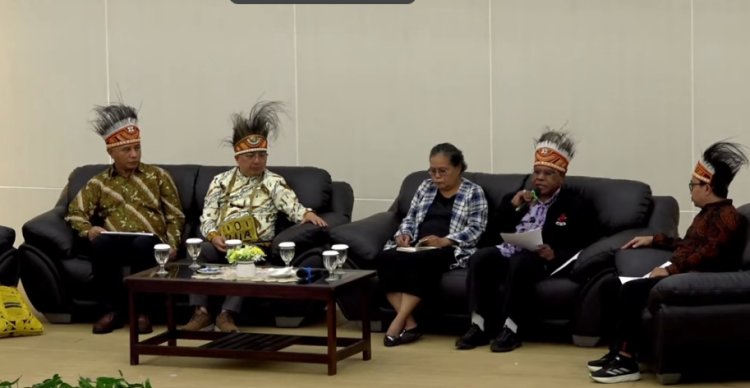
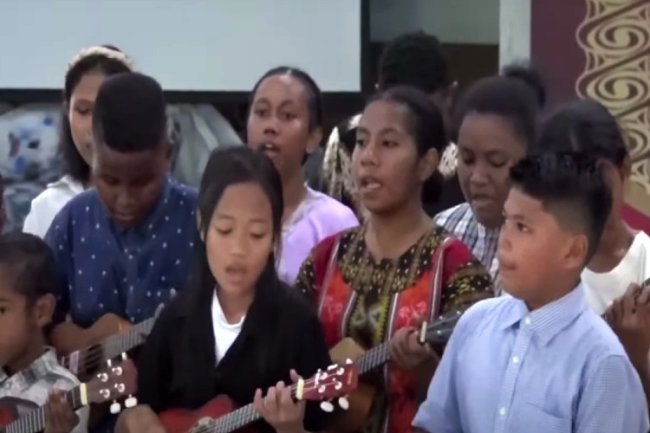
The event opened with a song about the hope of living in peace. In the room sat Catholic and Protestant church leaders, representatives of the Gusdurian network, theologians, and members of civil society. They had gathered to launch HONAI (Humanitarian Outreach to Need Assistance Initiative), a humanitarian crisis centre initiated by the churches of the Land of Papua.
The name was chosen deliberately. In the culture of Papua’s highlands, a honai is a traditional house, a place to shelter from the cold and sit together. Now it has become a symbol of safe space for those who have lost their own homes.
137,000 People Uprooted from Their Villages
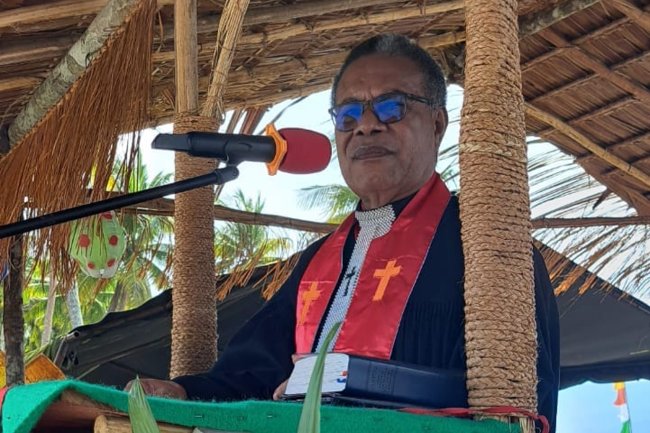
The figure presented by the Bishop of Timika, Mgr. Bernardus Baru, silenced the room. According to data from field workers, there are currently around 137,000 displaced people scattered from Merauke to Southwest Papua, including in Nduga, Intan Jaya, and Maybrat. That number could keep rising if nothing is done to prevent it.
The bishop, who once coordinated the conflict response in Maybrat, explained that the displaced face three acute problems: basic needs, health, and education. He likened the crisis to late-stage cancer.
Education worries him most. “Papuans could lose a generation of leaders,” he said. Only a small number of displaced children are in school. He also stressed that the victims of the conflict are not only civilians. Soldiers and police officers leave behind widows and fatherless children. The families of TPNPB members, too, live in fear and under suspicion. “All of this is a matter of humanity,” he said firmly.
“Peace Without Justice Is Merely an Illusion”
This saying of Gus Dur, Indonesia’s fourth president, became the common thread of the entire discussion. His daughter, Alissa Wahid, who addressed participants online, reminded them that peace not built on justice will never truly arrive.
“The conflict in Papua is a political conflict, but our duty to safeguard humanity stands above that political conflict.”
In her view, politics should secure human wellbeing, not sacrifice human beings for political interests. Developing Papua is also not simply a matter of raising welfare statistics. The true measure is the quality of life of Papuans themselves.
Ahmad, representing the Gusdurian network, posed a searching question: how many people who talk about Papua call for peace, and how many call for justice? “We hear the word peace far more often. Peace, peace. Yet Gus Dur said that peace without justice is an illusion.”
He also recalled a moment that still moves many Papuans. Asked why he chose to welcome the new millennium in Papua, Gus Dur replied that he wanted to see the sun rise from the east of Indonesia. The words came from a president who could no longer see. It was also Gus Dur who, in 2000, restored the name “Papua”, a gesture Papuans remember to this day.
Papua: A Test of Indonesian Nationalism
The General Secretary of the Communion of Churches in Indonesia (PGI), Rev. Darwin Darmawan, took the discussion to the question of nationhood. He described the situation in Papua as not only important but urgent. In Papua, suffering and even death have come to be seen as normal. “Where is the face of our humanity if what degrades human dignity is treated as ordinary?” he asked.
Citing Benedict Anderson, he noted that a nation is an imagined community. The Acehnese, Bataks, Javanese, and Papuans are not bound by primordial ties but by a shared idea. Nationalism is therefore better understood as an aspiration than a description. It must be continually nurtured by listening to every citizen’s voice.
“If the problems of Papua are not resolved, we must be honest that our crisis of nationalism is not resolved either,” he said. Just as the sun rises in the east, he argued, Indonesia ought to begin building from Papua and for Papua, including its people, environment, and culture, not only its natural wealth.
Si Vis Pacem, Para Iustitiam
Representing the Indonesian Bishops’ Conference (KWI), Father Hans referred to the bishops’ Pastoral Note issued on 17 August, The Path of Hope Amid the Nation’s Dynamics. In the 80-page document, Papua is mentioned around 40 times in the main text and 20 more times in the footnotes.
The bishops, he said, see two roots of the violence and injustice that keep recurring in Papua: the exploitation of natural resources and the marginalisation of identity. The land of Papua is immensely rich, and the state owes a great deal to that wealth. Yet on this rich land, its people are treated unjustly.
He then reworked the ancient Latin adage si vis pacem, para bellum (if you want peace, prepare for war) into si vis pacem, para iustitiam: if you want peace, prepare justice. Reading Pancasila, Indonesia’s state philosophy, he concluded that belief in God, humanity, and unity are the principles, deliberation is the method, and social justice is the goal. “If all those slogans do not bring about social justice, they are empty talk.”
Father Hans also called on the church to engage in self-criticism, since the church, too, has not fully lived out the Gospel.
An Absent State
The sharpest remarks came from the Bishop of Timika. He argued that the root causes of the Papua problem, long mapped out in studies by the Indonesian Institute of Sciences (LIPI), have never been addressed with justice at their core. Instead, political, investment, and power interests have been prioritised, through top-down policies from Jakarta and a militaristic approach. He cited several examples of an “absent state”:
• Killings outside the legal process. “Children stage a small protest and are shot dead on the spot. Under the law, there must be procedures.”
• Policies that put Papuans last in development. Good roads are built when transmigrants arrive, not for Indigenous Papuan villages.
• Pressure on academic freedom. Papuan students in Java are told not to write about Papua.
• The weakening of Special Autonomy and the Papuan People’s Assembly (MRP), the body meant to represent Indigenous Papuans.
“If Special Autonomy were implemented in earnest, Papuans would accept it and follow Gus Dur: Papua is part of Indonesia. Done,” he said.
The Church as a Bridge
So what does the church hope to achieve through HONAI? The Bishop of Timika’s answer was clear: to be a bridge. “Jakarta suspects Papua, Papua suspects Jakarta. That wall must come down.”
HONAI invites the president and his government, the military, the police, and the warring parties to sit down together and talk. “Not sending troops first and killing people first, then sitting down. Sit down first, talk, and then solve the problem.”
Do Not Forget the Women’s Honai
A moving close came from Rev. Dr. Diana Yembise, head of the I.S. Kijne Theological Seminary of the Evangelical Christian Church in Papua (STFT GKI). She pointed out that highland culture has both a men’s honai and a women’s honai, yet the women’s honai is often overlooked. And it is from women’s wombs that the next generation of Papuans is born.
She hoped the newly launched HONAI would be a shared home: a space for men and women, for children, for those who suffer, and for those crying out for help.
“May there be no more women giving birth unattended, forced to name their child ‘the refugee’.”
She also insisted that none of this should end as a prayer alone, but become shared work, from small children to policymakers.
A Milestone, Not an Endpoint
The moderator closed the event by recalling that dialogue once flourished under President Susilo Bambang Yudhoyono, through his recognition of the Papua Peace Network. The hope is that a similar space can be reopened.
Two hours is certainly not enough for a problem of this scale. Yet the launch of HONAI marks an important milestone. Churches, Muslims, and civil society agreed that humanity must be placed above politics, and that peace in Papua is only possible if it is built on justice.
For, as Gus Dur’s message echoed throughout the day, peace without justice is merely an illusion.
What's Your Reaction?